
Construction
Where Construction Debris Actually Goes Around Pontiac
Michigan's law changed direction in 2023. Separation is going to matter more from here, not less.
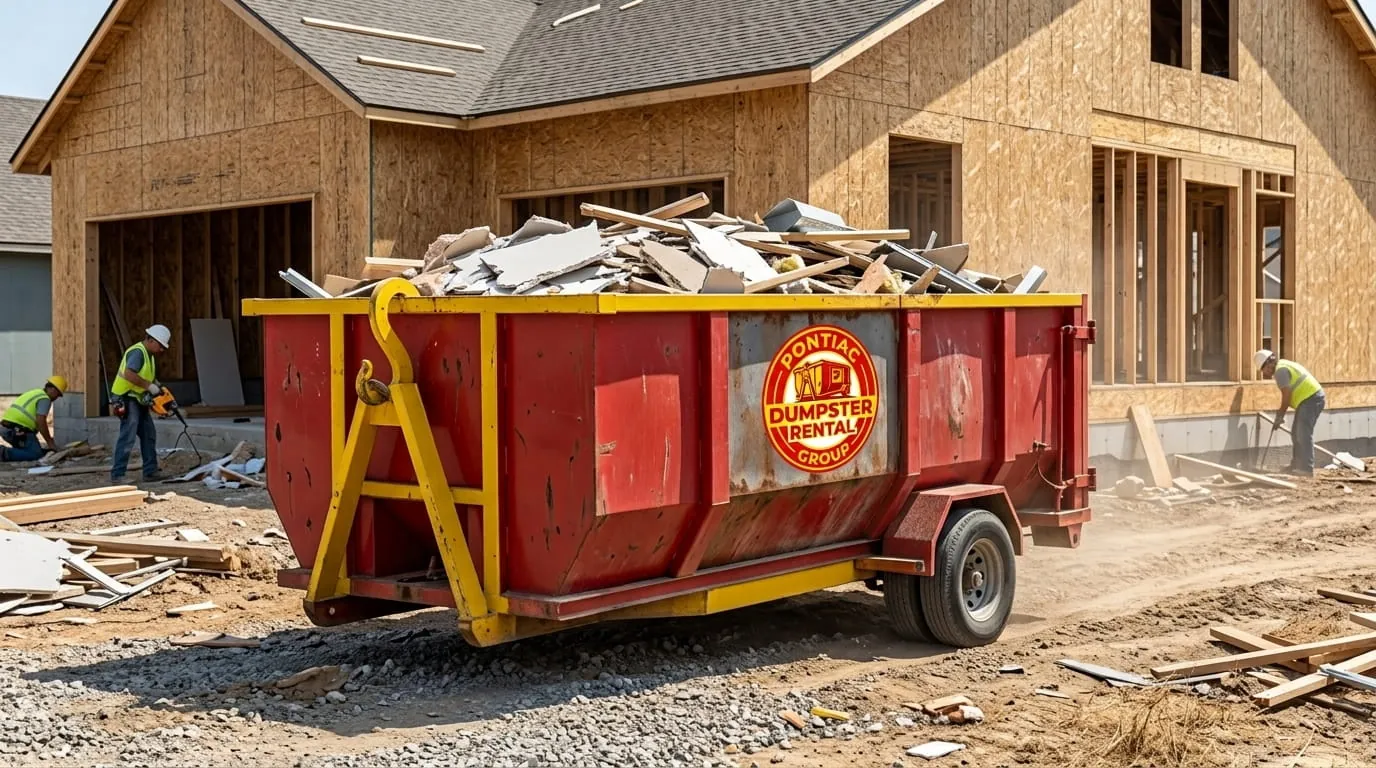
Why curbside collection does not fit
The City of Pontiac contracts a solid curbside operation — Priority has been the contractor for trash, yard waste and bulk pickup since 1 July 2024, coordinated through the DPW. For household waste and even for bulky items it works well.
But it is a curbside collection service. A renovation produces drywall or plaster, timber, tile, cabinetry, flooring and roofing in volumes that would swamp any cart system, and demolition produces masonry by the ton.
The five streams worth separating
1. Clean concrete, block and masonry
Rebar is generally fine; timber, plastic and general debris are not. Its own 10 yard, part-filled. Clean inert material has a cheaper route, and on a demolition job it is usually the single largest tonnage.
2. Scrap metal
The big one in this market. Ductwork, water heaters, structural steel, fencing, rebar offcuts, appliances — and in older Pontiac-area houses, cast iron radiators, soil stacks and galvanised supply pipe in real quantity. Positive value rather than a disposal cost.
3. Clean untreated wood
Untreated, unpainted, no laminate. Worth keeping separate where there is volume, and worth knowing that the state's direction of travel under the Part 115 overhaul is toward more recovery of exactly this kind of material.
4. Cardboard and packaging
New-build and fit-out work generates it in enormous volume and it fills a container faster than anything else on site. Flattening it is the cheapest volume saving available anywhere.
5. Plaster and general demolition debris
The residual. On older houses this is the heaviest single stream and the one that determines your container size.
Concrete and plaster: the weight traps
Concrete runs around two tons per cubic yard. Slab, footings, driveway, patio and block wall all belong in a 10 yard, part-filled. A large container of concrete is unhaulable long before it looks full.
Plaster and lath is the local addition, and it catches contractors who mostly work on newer stock. Pre-war Pontiac, Birmingham, Rochester and Clarkston houses have plaster over wood lath rather than drywall — applied wet in coats, dense, and roughly double the weight of drywall for the same wall area.
A whole-floor plaster strip-out belongs in a 10 or 15 yard with swaps, never in one 30. The full picture on older-house material is here.
Soil runs around a ton and a half per cubic yard. Site spoil is heavier than almost anyone estimates.
Metal is the one that pays
Worth emphasising because this market produces more of it than most.
A full gut of a pre-war house here typically yields cast iron radiators — potentially one per room, each extremely heavy — plus cast iron soil stacks and drain lines, galvanised supply plumbing, steel ductwork and often a decommissioned boiler.
All of it is recyclable, all of it has value, and every pound of it left in a general container is a pound you are paying to bury. Pull it into its own pile from day one. On a substantial renovation it frequently offsets a meaningful share of the disposal cost.
⚠️ What the law bars outright
Section 11514 of Part 115 prohibits specific materials from disposal in a non-hazardous solid waste landfill. On a construction site the ones that come up are:
- Asbestos-containing material — its own regime, see below
- Liquids, including leftover paint, stain, solvent and fuel
- Batteries, including the ones in cordless tools
- Tires
- Mercury-containing devices — old thermostats and fluorescent fixtures, common in commercial strip-outs
- Deposit beverage containers — on a long job with a crew, this becomes real volume
Asbestos deserves the emphasis. Demolition, waste handling and disposal fall under the federal NESHAP, which EGLE's Air Quality Division implements in Michigan. Landfills and abatement contractors must have provisions in place to meet it, and whether a given facility accepts it — and how it must be prepared and shipped — is a question for that facility directly.
In pre-1980 buildings around here, realistic candidates are floor tile and its adhesive, basement pipe and boiler lagging, textured finishes, and some siding and roofing products. Test before demolition starts.
Where your material can legally go
A Michigan-specific point that most contractors never have to think about, and should.
Part 115 requires waste import and export authorizations: material moving between counties must be approved by both the sending county and the receiving county. This is called reciprocal authorization, and it means a hauler cannot simply drive to whichever gate is open.
For you this is mostly invisible, and it should be. But it is why "where does this go?" is a fair question to ask a hauler, and why an unusually cheap quote is worth a second look. Detail on the Part 115 overhaul here.
The broader direction matters too. County solid waste plans are now county materials management plans, and must provide a baseline level of recycling access to meet state diversion goals including organics. Separation habits formed now will age well.
Job-site setup that saves money
- Place containers where the work is, not where they are convenient for the truck. Labor spent walking debris across a site is the largest hidden cost in waste handling — and on a basement job, the distance from the basement door is the whole game.
- Run a separate 10 yard for concrete and masonry on any job producing it.
- Set up the metal pile on day one. It pays for itself here.
- Put a cardboard point by the trades' entrance and break everything down flat.
- Put a returnables bin out. Deposit containers are landfill-prohibited anyway.
- Label the containers physically. A sheet of ply marked CLEAN CONCRETE ONLY is what actually protects a stream.
- Brief every trade on day one, and again when a new crew arrives.
- Check the overhead before the trades arrive — twenty-two feet, and this county has serious tree canopy.
Scheduling around the trades
On a phased job the container schedule should follow the trade sequence rather than sitting through the whole project.
A typical renovation runs: strip-out first, the heaviest and dirtiest phase, wanting a container on site continuously; then framing and mechanical, producing steady moderate volume plus the metal stream; then finishes, producing packaging and offcuts in bursts.
Three shorter placements timed to those phases usually cost less than one long one and keep the site clearer. Tell us the build program and we will schedule around it rather than making you call each time.
Two local scheduling notes. Spring thaw brings seasonal weight restrictions on Michigan roads, which occasionally shifts a delivery date on rural and unpaved approaches — worth a little slack in a March or April program. And winter changes access: a driveway with grade on it, which describes a lot of Clarkston and the northern townships, is a different proposition loaded and icy than it is in July.
Need a container in Pontiac?
Call and describe the job. Three minutes on the phone gets you a size recommendation, a flat rate and a delivery window — and we will tell you if a smaller, cheaper container is the right answer.
Call (947) 500-4675